Memopezil Official Website › How It Works
How Memopezil Works: Three Routes in One Capsule
Three routes, described the way the evidence describes them — and one of them is delivered at a dose the research has actually tested.
Memopezil works through three routes: calm alertness, memory over weeks, and support against mental fatigue.
L-theanine at 100 mg supports calm alertness, bacopa at 200 mg works slowly on memory and attention, and rhodiola and Panax ginseng were studied for mental fatigue.
L-theanine in Memopezil, and calm alertness
L-theanine is the amino acid in tea associated with relaxed focus. A 2022 dose-response crossover study tested 100, 200 and 400 mg against placebo in a double-blind crossover design and found that 100 mg significantly improved reaction time on simple visuomotor tasks — about a 16 ms gain. A separate 2019 randomised controlled trial in healthy adults reported reductions in stress-related symptoms alongside improvements on some cognitive measures.
Memopezil supplies exactly 100 mg. This is the one place on the label where the number in the capsule and the number in the literature are the same, and it deserves credit.
The honest limit. That same dose-response study found the effects on complex sustained attention and inhibitory control at 400 mg, not 100. So 100 mg is a real dose at the bottom of the useful range — enough for the simple-reaction and subjective-calm effects, not enough to claim the larger ones.
This is also, almost certainly, what people are describing when they notice something in the first week or two. Priya, 41, writes that “L-theanine calm is what I notice first”. That is the panel working exactly as its doses predict.
Bacopa monnieri in Memopezil, and memory over weeks
Bacopa is the memory ingredient on this panel and the most-studied botanical of its kind. A 2014 meta-analysis of nine randomised controlled trials in 437 participants found improved speed of attention and reduced reaction time. A randomised controlled trial in adults with age-associated memory impairment reported gains in logical memory and paired-associate learning.
The timescale is the thing to understand. Those trials run eight to twelve weeks. Bacopa is not a same-day or same-week ingredient, and any page implying otherwise is misreading its own citations. The reviews here reflect that precisely: the five-star reviewers are writing at day 35 to day 60.
The dose gap. The trials used 300 to 450 mg a day of standardised extract. Memopezil supplies 200 mg — about two thirds of the lower bound. That is a genuine shortfall, and it is also far closer than most products manage.
And the negative trial belongs on this page too. A 2010 trial by Morgan and Stevens gave 300 mg daily for twelve weeks to 101 adults aged 40–70 with self-reported memory complaints and found no greater improvement than placebo — at a dose higher than the one in this capsule. The bacopa literature is real but genuinely mixed, and a page that cited only the positive meta-analysis would be selling you a cleaner story than the evidence supports.
Practical consequence: take it before food. the StatPearls monograph lists gastrointestinal upset — nausea, cramping, loose stools — as bacopa’s common adverse effect, and that is why the label specifies 20 to 30 minutes before a meal rather than leaving timing to you.
The Memopezil adaptogens, and the BCAAs
Rhodiola rosea is studied for fatigue rather than memory. A 2012 systematic review of eleven trials found that three of five randomised trials on mental fatigue reported benefit, while stating that methodological flaws limit what can be concluded. A later dose-response trial worked across a 200–1,500 mg range. Memopezil supplies 100 mg, below the bottom of it.
Panax ginseng has the longer cognitive literature — a 2024 systematic review and meta-analysis pooling fifteen trials, and a 2019 systematic review noting that the most consistent finding in healthy adults is on secondary memory at single doses around 400 mg. Memopezil supplies 90 mg, roughly a fifth. This is the weakest dose-to-evidence match among the botanicals.
The BCAAs are the outlier. At 540 mg they are the largest figure on the label and the ingredient least connected to memory: The NIH Office of Dietary Supplements covers them as an exercise-performance supplement, and that research uses grams. The theoretical cognitive route — competing with tryptophan for transport into the brain, affecting central fatigue — is real but is not what 540 mg is going to accomplish.
Read together: the adaptogens plausibly contribute to a general sense of less mental fatigue. They are not doing the memory work, and the BCAAs are mostly making the panel look substantial.
And the route that is not on this page. The National Institute on Aging sets out what actually protects cognitive health across years: physical activity, sleep, blood pressure and diabetes control, treating hearing loss, social contact, treating depression. On supplements, NCCIH’s research digest states plainly that none has been shown to prevent or treat cognitive decline or dementia, and the National Institute on Aging says the same for diet and Alzheimer’s prevention. Memopezil sits alongside those levers, not in place of them.

Every page, every journal post, the bottle facts and the ingredients go through review by Dr. Janyna Mercado before they ship. Memopezil is unusual in this category: it publishes a milligram figure for every active. That lets us do something most supplement pages cannot — put each published dose directly beside the dose used in the human trials, and tell you which ones match and which fall short. We do that on every ingredient, including the three that do not measure up. Corrections are made on the page itself and the review date moves forward — write to [email protected]. Last reviewed September 2026 by Dr. Janyna Mercado.
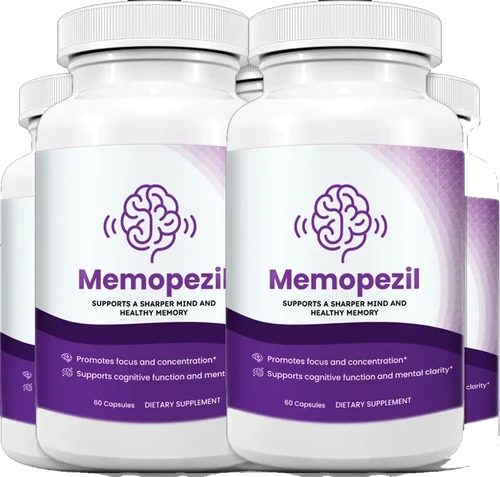
Memopezil: theanine now, bacopa later, the rest along for the ride.
That is the mechanism, stated at the size it actually is. If it is what you were looking for, six bottles is $49 each.
$294 — six bottles at $49 each
Order Memopezil On The Official WebsiteFree US shipping · five digital bonuses · 60-day money-back guarantee · lot MPZ-2026-NY-0847