Memopezil Official Website › Blog › Not Donepezil
Memopezil vs Donepezil: Why the Two Are Not the Same
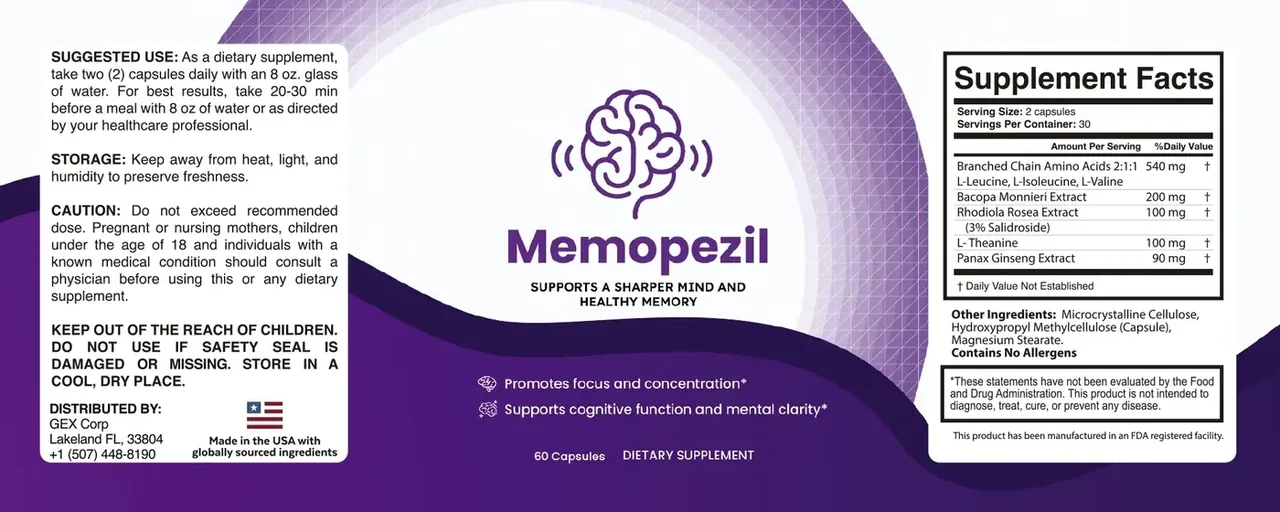
Memopezil vs donepezil comes down to one fact: they are different kinds of product. Donepezil is a prescription drug, the generic name of Aricept, prescribed and monitored by a clinician. Memopezil is a dietary supplement capsule with five printed actives: BCAAs 540 mg, bacopa 200 mg, rhodiola 100 mg, L-theanine 100 mg and Panax ginseng 90 mg. It contains no donepezil, and it is not an alternative to any prescription. The names rhyme; nothing else does.
- Donepezil is a prescription drug — an acetylcholinesterase inhibitor, prescribed and monitored by a clinician.
- Memopezil is a dietary supplement of five botanical and amino ingredients. It contains no donepezil and no drug of any kind.
- Phrases like “natural donepezil” are not ours and are not accurate. No supplement is a natural version of a prescription medicine.
- Never substitute. If someone is prescribed donepezil, this product is not an alternative and must not be used as one.
This is general information, not medical advice. Memopezil is a dietary supplement. It is not a medicine, it is not donepezil, and it is not a treatment for Alzheimer’s disease, dementia or mild cognitive impairment. New or worsening memory problems are a reason to see a doctor. Never stop or change a prescription because of a supplement.
What donepezil actually is
Donepezil is a prescription medicine used in the management of Alzheimer’s disease. It works as an acetylcholinesterase inhibitor, it went through clinical trials for that indication, it is prescribed by a clinician who monitors the person taking it, and it has a defined side-effect and interaction profile.
None of that describes a supplement. The FDA's questions and answers on dietary supplements sets out the distinction in the regulator's own words: supplements are not reviewed for safety and effectiveness before sale, and they may not be marketed to treat, prevent or cure any disease.
What Memopezil actually is
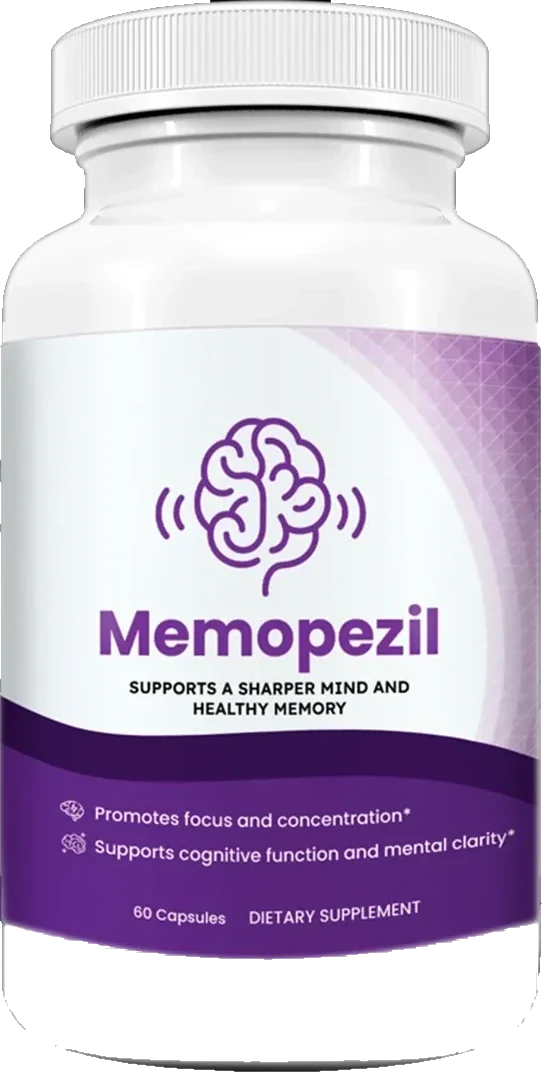
Five named actives, each with a published milligram amount: L-theanine 100 mg, bacopa monnieri extract 200 mg, rhodiola rosea extract 100 mg, Panax ginseng extract 90 mg, and BCAAs 540 mg. Two capsules a day. No donepezil, no prescription ingredient, no drug.
A 2024 systematic review and meta-analysis of ginseng and cognitive function is representative of the evidence base behind ingredients like these: real research, modest findings, a long way from a licensed medicine. The full panel and every citation is on the ingredients page.
The difference, side by side
| Donepezil | Memopezil | |
|---|---|---|
| Category | Prescription medicine | Dietary supplement |
| Panel on the pack | Drug Facts | Supplement Facts |
| Approved to treat a disease | Yes | No |
| Needs a prescription | Yes | No |
| Clinician monitoring | Yes | No |
| Contains donepezil | Yes | No |
Sold as what it is.
A botanical supplement with five published doses, from the authorized United States distributor — with sixty days to change your mind.
$294 — six bottles at $49 each
Order On The Official WebsiteFree US shipping · five digital bonuses · 60-day money-back guarantee
Where “natural donepezil” comes from
Some third-party pages describe this product using phrases such as “natural donepezil,” and some list ingredients that are not on our label at all. Those pages are not written by the manufacturer or by this distributor, and we do not control them.
We can tell you three things about phrases of that kind:
- They are not accurate. There is no natural equivalent of a prescription acetylcholinesterase inhibitor, and this product does not claim to be one.
- They are not legal marketing in the United States. A supplement may not be presented as a substitute for a drug that treats a disease.
- They are dangerous if believed by someone deciding whether to fill a prescription. That is the reason this page exists.
The authoritative sources for what is in this bottle are the printed panel and this website. The ODS consumer guide to dietary supplements is the neutral primer on reading supplement information critically — including ours.
How supplement names end up like this
It is reasonable to ask why a supplement would carry a name so close to a prescription drug at all. We did not choose the brand name — this website is the authorised United States distributor for a product that already had one — but the pattern is worth explaining, because recognising it protects you across the whole category.
- Names that echo a medicine borrow its credibility without making a claim that could be challenged. A suffix is not a statement.
- Search traffic follows the drug. A name close to a widely searched medicine collects some of that attention.
- Third parties then fill in the blank. Affiliate pages and content farms supply the comparison the label never made — hence the phrases we are rebutting on this page, which we did not write and cannot remove.
The defence is the same one that works on every label: read the panel, not the name. A Supplement Facts box means a supplement, whatever the word above it resembles, and the FDA is clear about what that category may and may not claim.
What to say to a doctor if you are taking both
Some people arrive at this page already prescribed donepezil, or caring for someone who is. The important points are short.
- Do not stop or change a prescription because of anything on this website. That decision belongs to the prescriber, always.
- Tell them what you are taking. All five ingredients are printed on the ingredients page with their doses — show them the page rather than trying to recall the names.
- Ask specifically about interactions. Ginseng and rhodiola both carry documented cautions, and bacopa is worth naming if there is thyroid medication involved.
- Accept a no. If the answer is that it is not appropriate, the 60-day guarantee covers you, and the desk does not argue inside the window.
Why a botanical cannot be a version of a drug
The phrase “natural version of” is worth taking apart properly, because it is applied to more than this one product and the reasoning behind it is always the same.
A prescription medicine is a defined molecule at a defined dose, manufactured to a specification, tested in controlled trials for a named condition, and approved on the strength of those results. Every one of those clauses does work. Change the molecule, the dose, the manufacturing standard or the evidence, and you do not have a version of the drug — you have a different product.
A botanical extract is a mixture of many compounds whose proportions vary with the plant, the season and the extraction. That variety is interesting, and it is the opposite of what a defined medicine is. There is no way to be a natural version of something whose defining feature is that it is defined.
What a supplement can honestly be
- A source of specific compounds at a stated amount, which this label is.
- An addition to a diet and a routine — the word the regulations themselves use.
- Something with published research behind its ingredients, cited so you can read it yourself.
- Never a substitute for a prescribed treatment, and never marketed as one.
NCCIH's research digest on supplements and cognitive function is the plainest neutral summary of how far this category has actually got, and it is worth reading before spending money anywhere in it — here included.
What to do if memory is the real concern
If you or someone close to you is noticing genuine memory change — repeated questions, missed appointments, getting lost on familiar routes — the correct next step is a doctor, not a supplement. That is true whatever we are selling.
- Book an assessment. Many causes of memory change are treatable, and several have nothing to do with dementia at all.
- Bring a list of every medicine and supplement being taken. Interactions and side effects are a common and reversible cause.
- Ask about the things with evidence. The National Institute on Aging sets out what actually supports cognitive health as people age.
- Then, if you want to, consider a supplement as an optional addition — never as a replacement for any of the above.
NCCIH's research digest on supplements and cognitive function is the honest summary of what this category can and cannot be expected to do. If you have questions about the product itself, call +1 (507) 448-8190 or write to [email protected] — a person answers.
So what are we actually claiming?
Having spent a page on what this product is not, it is only fair to be precise about what is being offered. Here it is, with nothing hedged.
| We do say | We do not say |
|---|---|
| Five actives, each with a published milligram dose | That those doses match every trial |
| Those ingredients have real published research | That the finished product has been tested |
| Bacopa's evidence is the strongest here | That it will improve your memory |
| It contains no caffeine and no stimulants | That you will feel something |
| Made in a registered facility, lot on record | That any of this is a medicine |
| Sixty days to decide, refund inside it | That it works for everybody |
The right-hand column is the one most supplement websites leave blank. Printing it is not modesty — it is the only accurate way to describe a dietary supplement, and the ODS consumer guide describes the category in much the same terms.
The one genuine advantage worth repeating
Every active on this label has a number next to it. In a category built on proprietary blends and undisclosed amounts — including, candidly, other products on other websites we are involved with — that is unusual, and it is the single most useful thing about this product. It lets you do the arithmetic yourself instead of trusting a sentence. Do it: open the ingredients page, take any ingredient, and compare our number with the dose its own research used. Then decide.
References
- Effects of ginseng on cognitive function: a systematic review and meta-analysis. 2024. https://pubmed.ncbi.nlm.nih.gov/39474788/
- National Center for Complementary and Integrative Health. Dietary supplements and cognitive function, dementia, and Alzheimer's disease: what the science says. https://www.nccih.nih.gov/health/providers/digest/dietary-supplements-and-cognitive-function-dementia-and-alzheimers-disease-science
- National Institute on Aging. Cognitive health and older adults. https://www.nia.nih.gov/health/brain-health/cognitive-health-and-older-adults
- U.S. Food and Drug Administration. Questions and answers on dietary supplements. https://www.fda.gov/food/information-consumers-using-dietary-supplements/questions-and-answers-dietary-supplements
- National Institutes of Health, Office of Dietary Supplements. Dietary supplements: what you need to know. https://ods.od.nih.gov/factsheets/WYNTK-Consumer/
Every page, every journal post, the bottle facts and the ingredients go through review by Dr. Janyna Mercado before they ship. Memopezil is unusual in this category: it publishes a milligram figure for every active. That lets us do something most supplement pages cannot — put each published dose directly beside the dose used in the human trials, and tell you which ones match and which fall short. We do that on every ingredient, including the three that do not measure up. Corrections are made on the page itself and the review date moves forward — write to [email protected]. Last reviewed September 2026 by Dr. Janyna Mercado.
Honest about what it is.
A supplement, not a medicine. We would rather lose a sale to that sentence than gain one without it.
$294 — six bottles at $49 each
Order Memopezil On The Official WebsiteFree US shipping · five digital bonuses · 60-day money-back guarantee · lot MPZ-2026-NY-0847